My Favourite Road Cycling Loop from Hoek van Holland and Why It’s Best in Winter
For those who still don’t know. The Netherlands might just be one of the most underrated cycling countries there is. Yes, we lack mountains. Completely. Painfully. Almost offensively flat.
What we do have, however, is cycling infrastructure that borders on the absurd. Dedicated bike paths are everywhere. From my own front door, I can ride loops that barely touch a road. And that is not poetic licence. That is just how it is here.
That simple realisation is what pushed me to write this piece. Consider it an ode to one of my favourite routes. A loop I ride often. And one that shows its best when most people would rather stay inside.
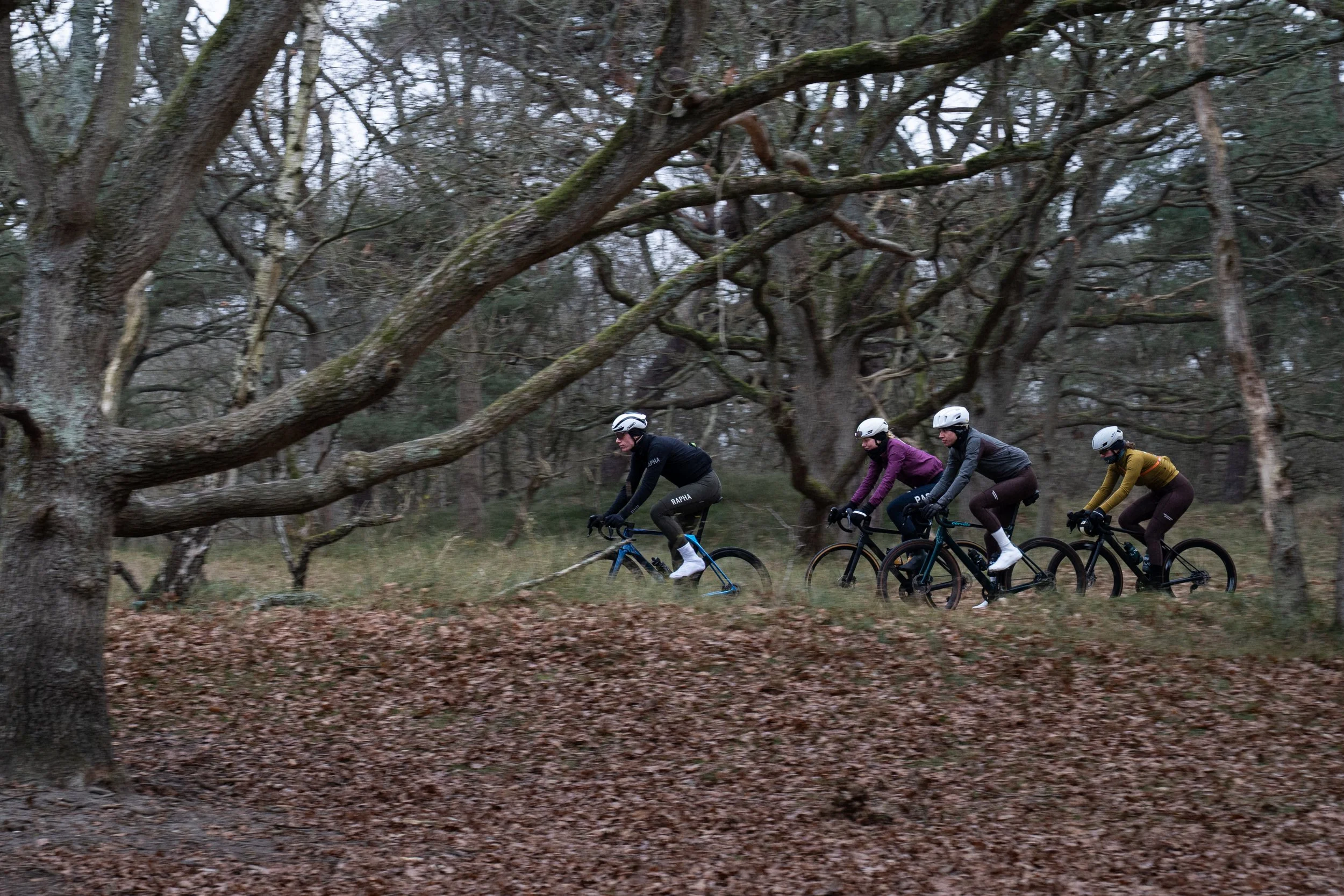
the best of zuid holland in a 130-kilometre road cycling Route
I am based in Hoek van Holland. Literally meaning corner of Holland, it immediately rules out two directions. West is sea. South is river.
And yet, route options from here are almost endless. Precisely because we lack mountains, the density of cycling infrastructure is remarkably high.
What makes this region special is how much variety is packed into a single loop. Within fifty kilometres, you move from coastline and dunes to farmland and rivers. You pass boats, fields and farms. Historic heritage towns like Delft. And Rotterdam, which feels more like an architectural metropole than something typically Dutch.
So I’m aware that cycling in this corner of the Netherlands doesn’t sit high on many bucket lists. But it’s quietly special and surprisingly rich.
Although I could easily share a hundred different routes from here, I picked just one. This 130-kilometre loop from Hoek van Holland to Scheveningen, via Wassenaar and the river Rotte, returning through Rotterdam and back to the coast. Flat as a pancake. Largely traffic-free. And if you are lucky, the wind will provide all the challenge you need.
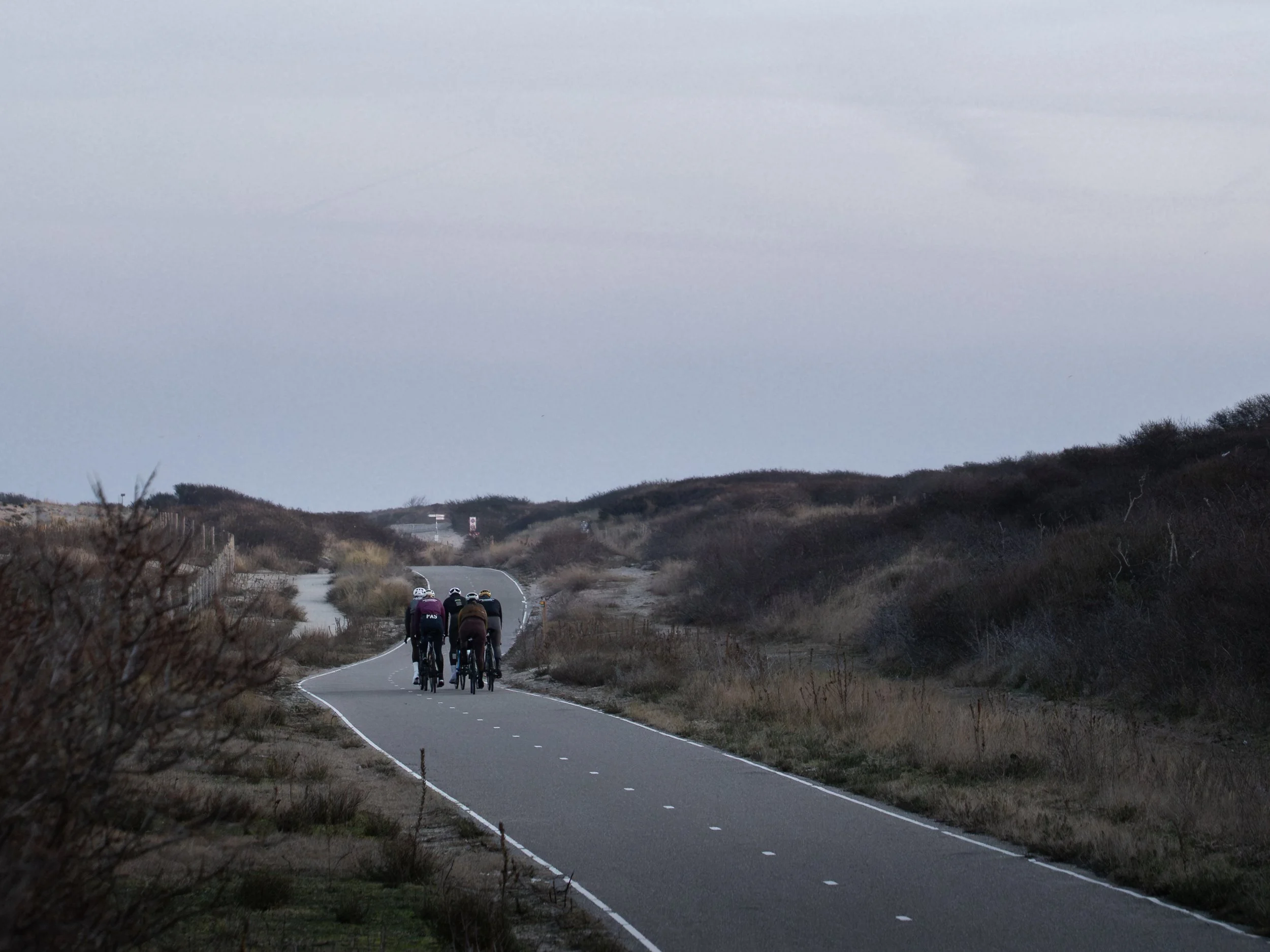
Dunes, Wind, and the NORTH Sea
Riding this loop from Hoek van Holland makes perfect sense. Parking is easy, free and plentiful. Unless it is a warm summer’s day, which I would actively advise against, for reasons I will explain later.
Start near Café De Zeetoren. Set your navigation to Helmweg 7, and you will find a parking spot without effort. The café opens relatively late, so it works best as a reward rather than motivation.
From here, you roll straight towards the beach. Just before hitting that, a right turn pulls you into the dunes, and the first fifteen kilometres unfold quietly. These dunes began forming over five thousand years ago. First as beach ridges, later shaped by drifting sand, and eventually reinforced by the Dutch as a defence against the sea.
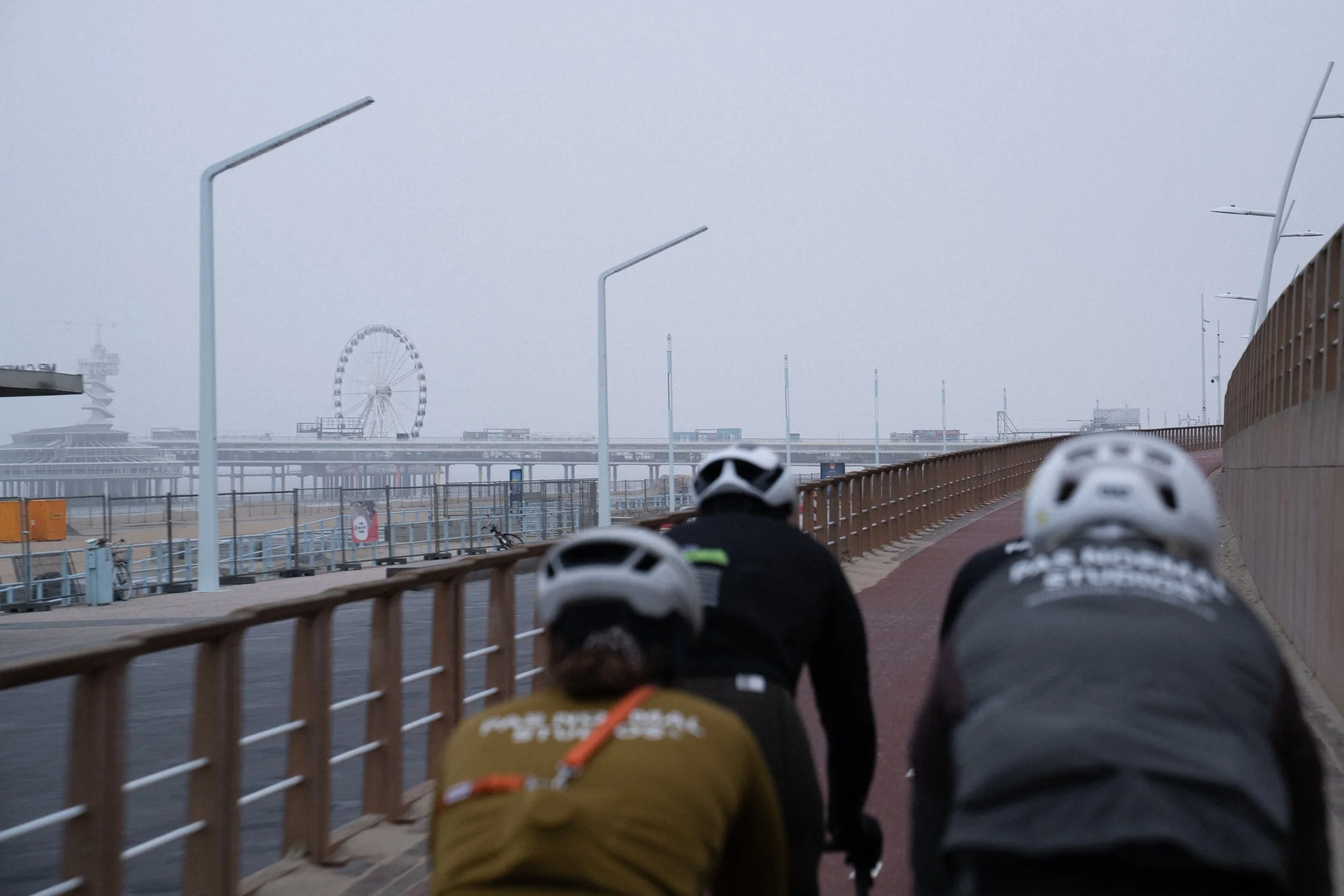
After passing the small coastal suburb of Kijkduin, the path continues until Scheveningen. You pass its harbour, roll along the boulevard with views of the pier, glide past the Kurhaus and continue across the Waldorper Vlakte. From there, the pavement threads through the dune forests of Meijendel, where you finally leave the coast behind.
Through Wassenaar and the smooth bike path of Landgoed De Horsten
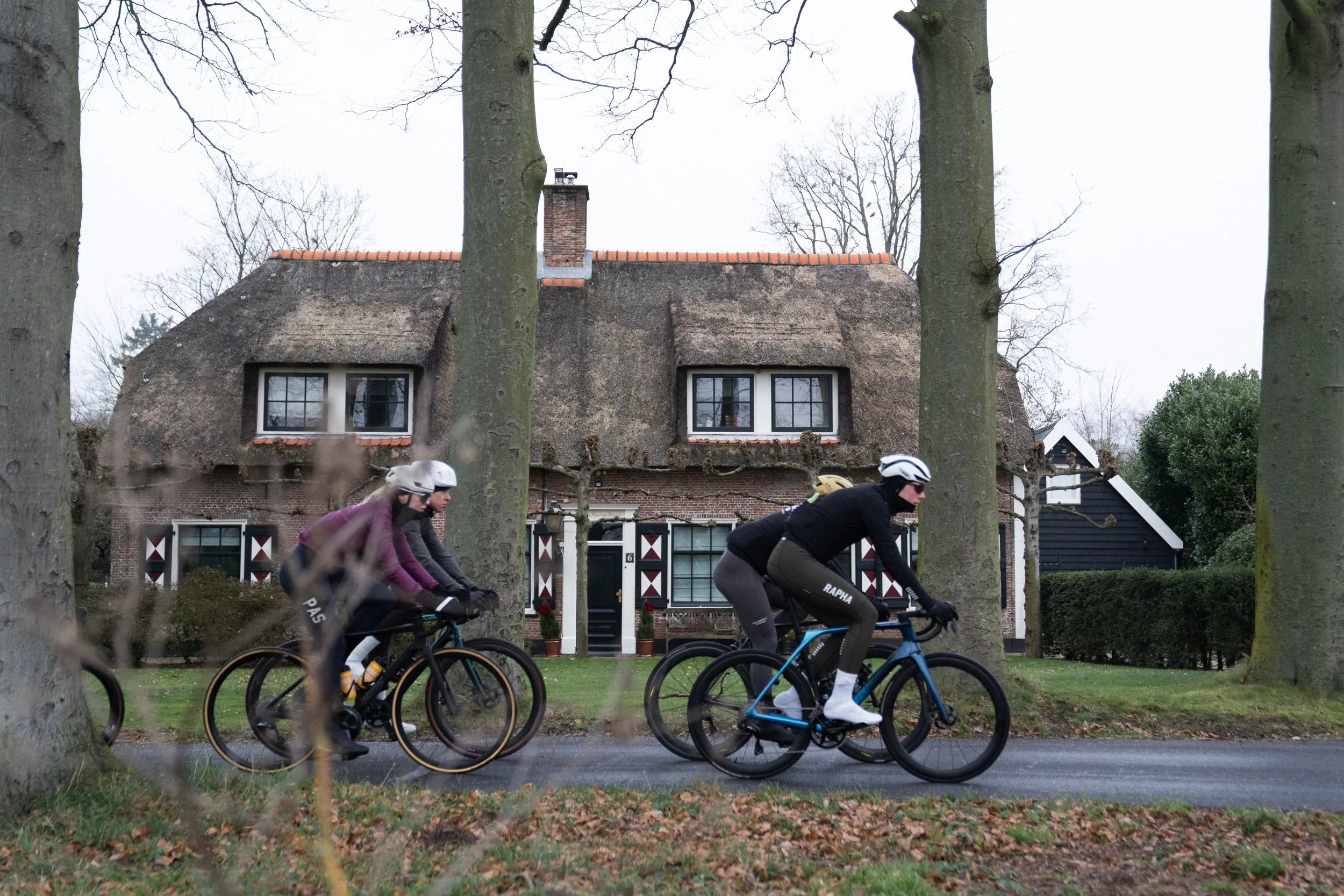
You briefly roll through the outskirts of Wassenaar, one of the wealthiest municipalities in the Netherlands. Large houses line the road, many looking more like boutique hotels than family homes. Style and parked cars quietly reveal whether the money is old, new, or arrived suspiciously fast.
Soon after, the route passes Landgoed De Horsten, the former residence of our king and queen. And here, the bike path becomes smooth and fast, cutting through parkland, woodland and open polder. This is effortless riding at its best.
Farms, the Rotte River and the Rural Edge of the Randstad
Skirting the edge of the Randstad with careful intent, the route crosses the river Vliet and passes over the A4 motorway, heading towards Zoetermeer. Farm fields dominate the landscape.
In the distance, you spot the unmistakable three-hundred-metre indoor ski slope. A surreal landmark in an otherwise relentlessly flat country. A reminder that when a country is flat enough, people will eventually build their own mountains.
We avoid Zoetermeer itself entirely, for reasons best left unexplored, and instead follow the route towards the source of the river Rotte. The waterway that gave Rotterdam its name.
Prins Alexander Roeibaan and the First Glimpses of Rotterdam’s Skyline
Excellent cycle paths run along both sides of the Rotte. For Rotterdam cyclists, a Rondje Rotte is almost sacred. One side out. The other back. Summer evenings turn it into a race circus and full-blown Strava battleground of idiots. You do you.
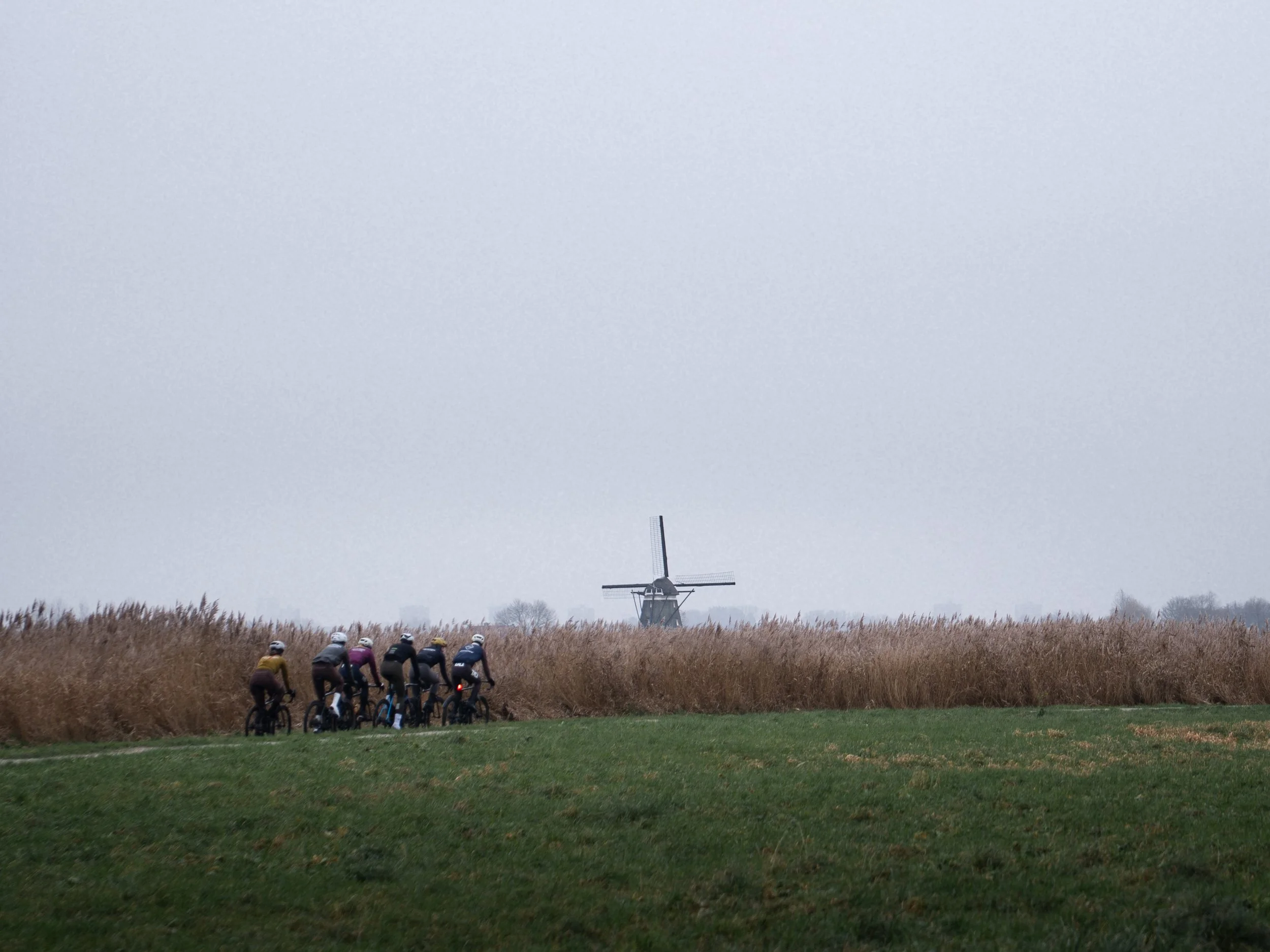
We follow the western bank. The more scenic option from where you spot seventeenth-century windmills lining the water on the opposite side. Once used to reclaim land for agriculture and still operational.
This is also where you discover that the wind here never really takes a day off. Usually straight from the south-west. And there is nowhere to hide. This is what we like to call Dutch mountains, minus the views and plus the suffering.
You pass the Prins Willem-Alexander Roeibaan, an international rowing course opened in 2013 that also functions as water storage for the city. On a clear day, the skyline of Rotterdam appears on the horizon.
Following the IJssel and Maas boulevard into the city of Rotterdam
Before fully entering the city, the route first continues towards the river IJssel. You briefly leave the cycle path for some roads. But cars can usually be counted on one hand. The real opponent remains the wind.
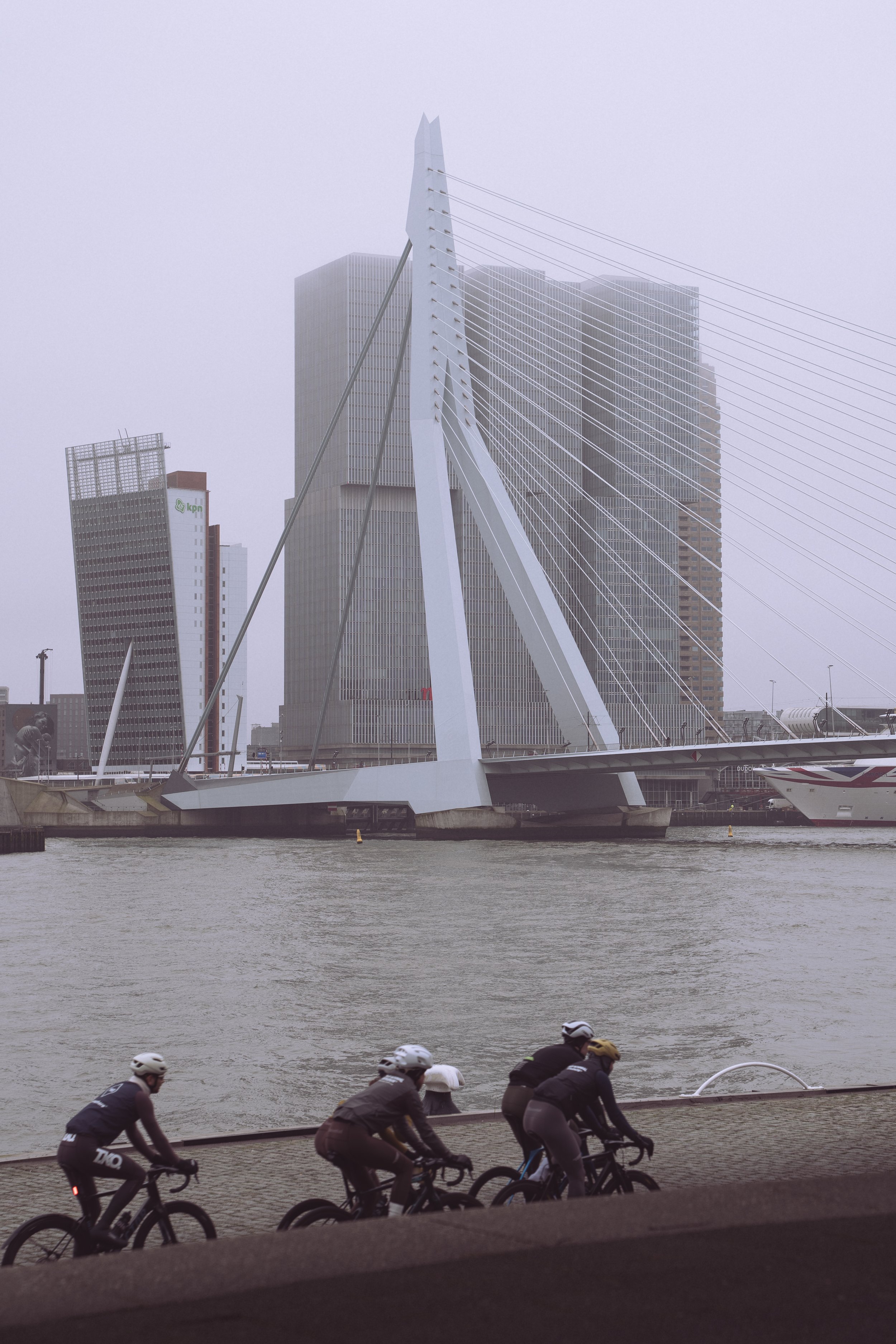
After around eighty-five kilometres, the IJssel flows into the Maas, and Rotterdam begins to show itself. Dedicated bike paths guide you forward, offering wide views of the city’s impressive skyline.
Its bold architecture is the result of radical post-war rebuilding after the city was bombed during the Second World War. Rather than reconstructing the old, Rotterdam chose experimentation. Wide avenues, modern buildings and skyscrapers define the city today.
At first glance, Rotterdam may not feel particularly cosy. But do not worry. Coffee fixes most things.
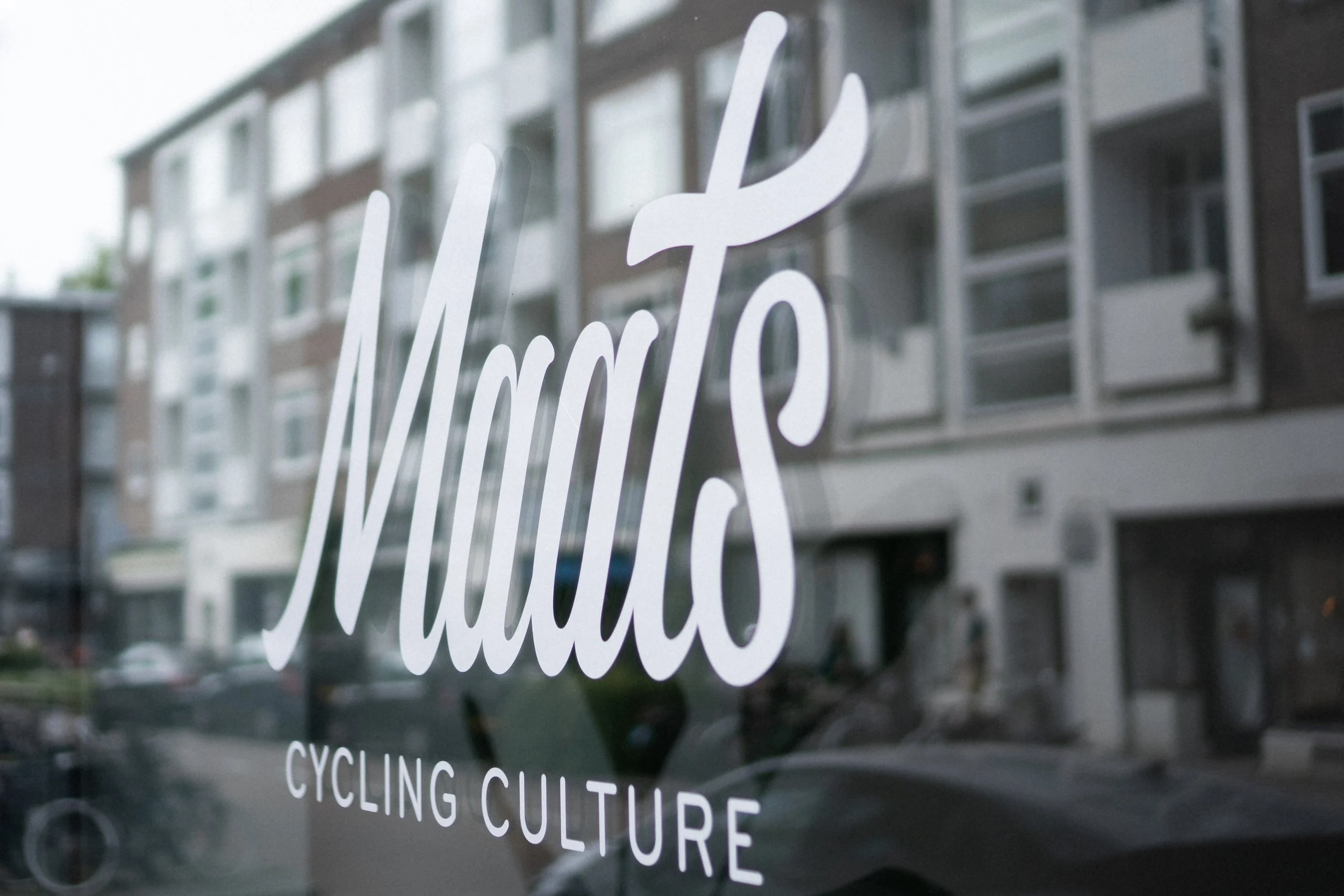
Coffee Stop at Maats Cycling Culture
Rotterdam has excellent cafés everywhere, but for a ride like this, I highly recommend Maats Cycling Culture. A premium Dutch cycling shop, also located in Amsterdam and Utrecht.
What makes Maats special is its community. Group rides that invite the making of new friends.
You can roll your bike inside, order an espresso, cappuccino, flat white, cortado or whatever you fancy, and chat with the staff who genuinely care about riding.
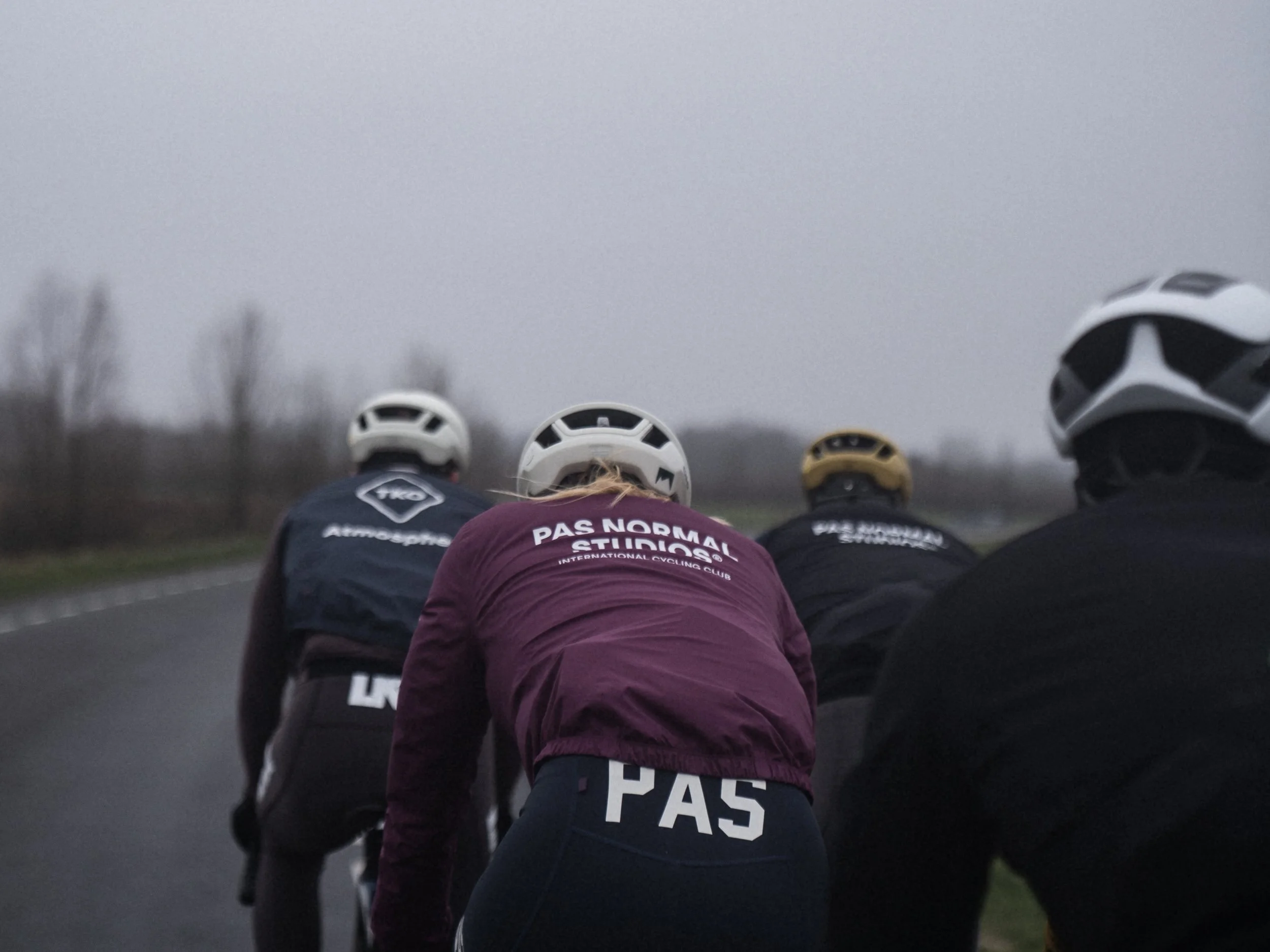
You will almost certainly be tempted by kit from brands like Pas Normal Studios, MAAP and Rapha. Unless you need an extra layer, best to resist. Let’s attack those thirty-five kilometres to go.
Back to the Coast via the Maeslantkering
Leaving Maats, the route follows the Maas Boulevard, passes along the charming Veerhaven with sweeping views of the Erasmus Bridge, the Kop van Zuid and Hotel New York. Once the departure point for emigrants heading to North America by ferry.
You pass the Euromast. At 185 metres, the tallest observation tower in the Netherlands, built in 1960. Then the route heads west, leaving the city through a rougher side of Rotterdam. Not pretty. But real.
For fifteen kilometres, you ride alongside the port of Rotterdam. Industrial. Raw. Functional. You pass near historic harbour towns like Delftshaven, Schiedam and Vlaardingen, although this route prioritises flow over sightseeing.
With twenty kilometres to go, you rejoin another excellent bike path along the Maas, or from here we called it Nieuwe Waterweg. For real, it’s a hand-dug canal completed in the nineteenth century.
Near Maassluis, the white skeleton of the Maeslantkering appears. A massive automated storm surge barrier that can close during extreme weather. Each steel gate rivals the Eiffel Tower in height.
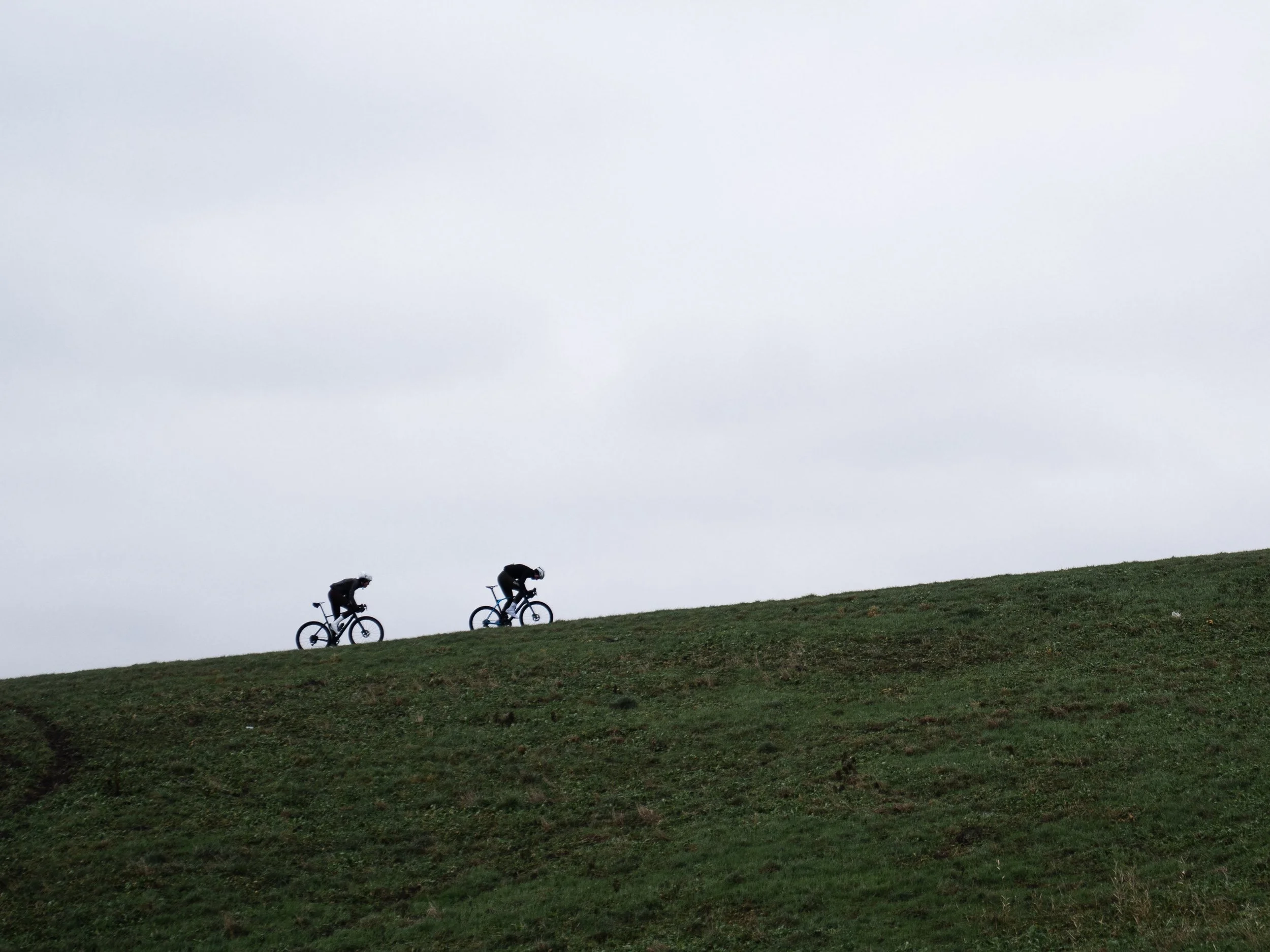
You can climb the hill beside it, the so-called Col de Maeslantkering, if you are still craving some elevation. Also, it is worth it, if only to appreciate the scale of the world’s largest moving structure.
Then comes the final stretch. Back to the coast. Back to where you started.
Finish With a Hot Chocolate at De Zeetoren in Hoek van Holland
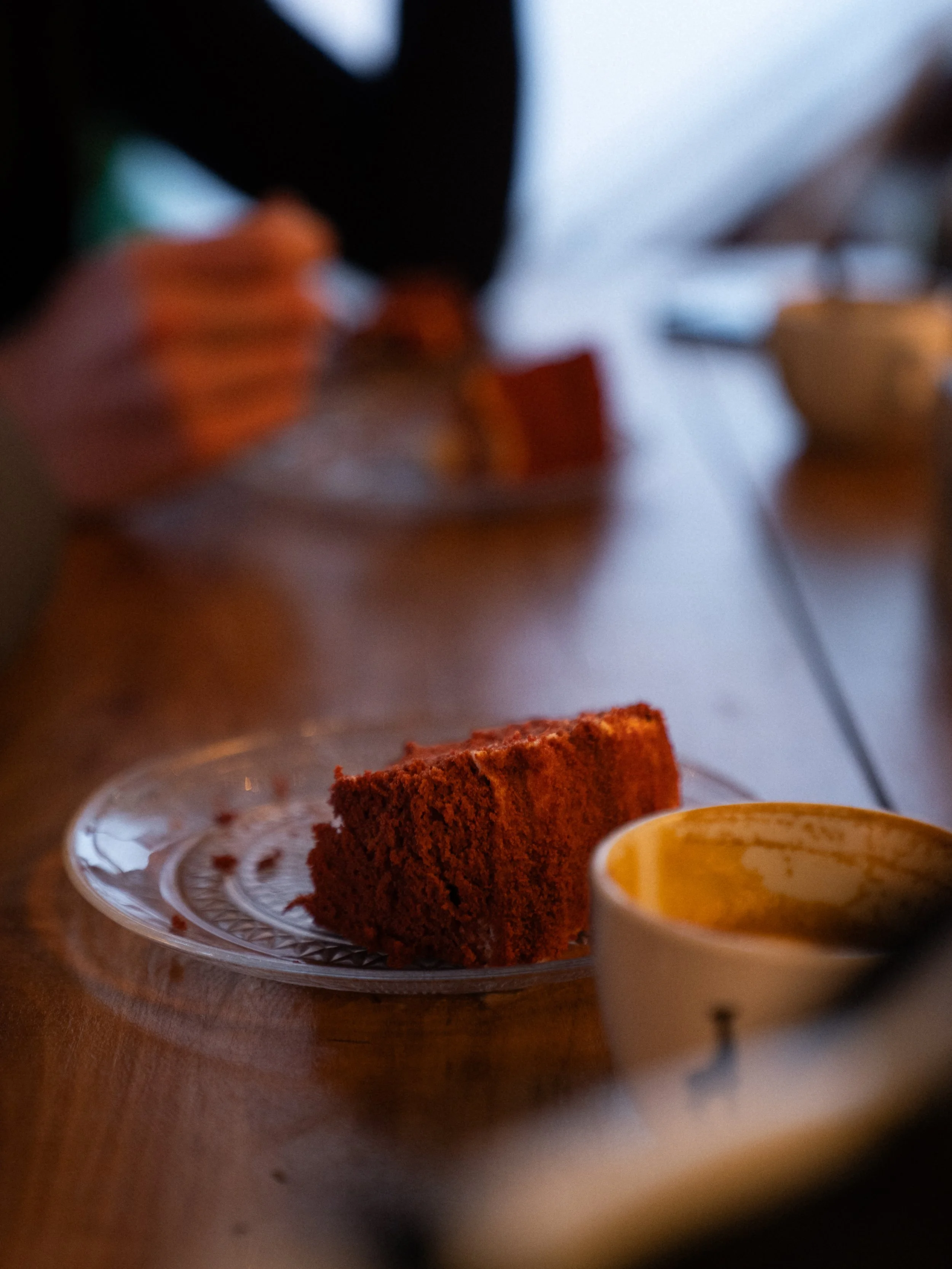
From the beach at Hoek van Holland, you turn back into the dunes and roll back towards De Zeetoren. I hope you are hungry, because skipping cake here would be a mistake.
De Zeetoren was built in 1942 by German occupiers as part of the Atlantik Wall, housing naval radar. Today, it is my favourite café restaurant close to home. The interior is warm and inviting. The terrace is spectacular, overlooking the dunes. The food is excellent. The staff are kind. And your bike can be parked safely if you follow the tiled path to the right of the entrance until the terrace.
This is it. You would love to chill on the terrace now. But chances are you will not. Which brings me to the final point.
Why Winter Is the Best Time to Ride This Loop
As good as riding here is, there is one drawback. Cycling has never been more popular. And the best paths attract literally everyone. Especially the epic coastal and riverside stretches. On sunny spring and summer days, it can be complete chaos and hard to enjoy.
That is precisely why winter, or at least what many would call off-season, is my favourite season for this loop. Just pick your day last minute. Watch the weather. And ride when most people stay inside.
You get the same roads. The same views. And almost magically, hardly anyone else. Like you cracked a small, satisfying secret.